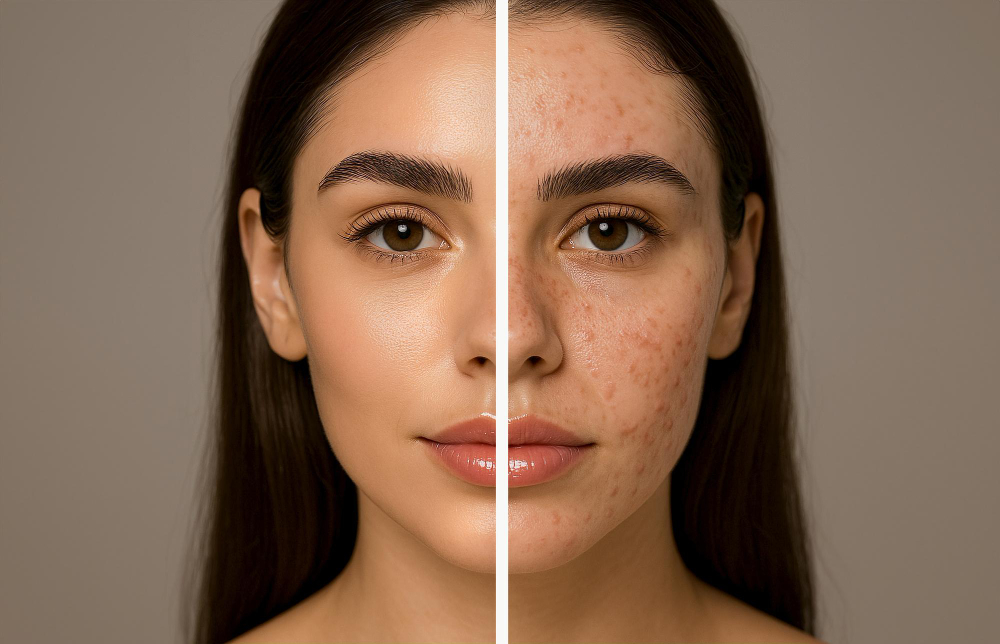
Acne scar revision helps people reduce the marks left by past breakouts. Many want smooth, clear skin, so finding treatments that actually work is important. Effective acne scar revision can boost confidence and improve skin health. In this blog, we will explore what acne scars are, why they form, and the best acne scar treatments available today. If you are searching for safe acne scar revision methods or want to know how to remove acne scars, you are in the right place.
What Are Acne Scars?
Acne scars are marks or indentations left on the skin after pimples heal. Sometimes, the skin does not heal smoothly, leaving behind visible scars. These scars can be shallow or deep. For many, they are a source of stress. However, with the right care, their appearance can be reduced.
Types of Acne Scars
Not all acne scars look the same. In fact, there are several types:
Knowing your scar type helps you choose the best acne scar treatments.
Why Do Acne Scars Form?
Acne scars form when the skin tries to heal after a pimple. Sometimes, the body makes too much or too little collagen, a protein that helps skin stay firm. If too little collagen forms, the skin sinks, causing atrophic scars. If too much forms, the skin rises, leading to hypertrophic scars. Picking or squeezing pimples can also increase the risk of scarring. Therefore, gentle skin care is important.
Overview of Acne Scar Revision
Acne scar revision means using treatments to make scars less noticeable. Today, many safe acne scar revision methods are available. Some work by removing the top layer of skin, while others boost collagen production. The right treatment depends on your skin type, scar type, and personal goals. For best results, a certified dermatologist should guide your care.
Proven Treatments That Work
Several evidence-based options can help reduce acne scars. Below are the most effective treatments:
Laser Therapy
Microneedling
Chemical Peels
Dermal Fillers
Subcision
Other Evidence-Based Options
For many, a combination of these treatments gives the best results. Always ask about safe acne scar revision methods at clinics near you.
How to Choose the Right Treatment
Choosing the best acne scar treatment depends on several factors. First, consider your scar type. Next, think about your skin tone and sensitivity. Also, your budget and time for recovery matter. A dermatologist can examine your skin and suggest the safest, most effective options. Sometimes, more than one treatment is needed for the best outcome.
Prevention Tips and Aftercare
Preventing new scars is just as important as treating old ones. Here are some tips:
After any acne scar revision treatment, avoid harsh scrubs and direct sunlight. Healing takes time, so be patient and consistent with your care.
Frequently Asked Questions (FAQ)
For more information, consult a certified dermatologist to find the best acne scar revision treatment for your skin.